An app for working with UN sanctions.
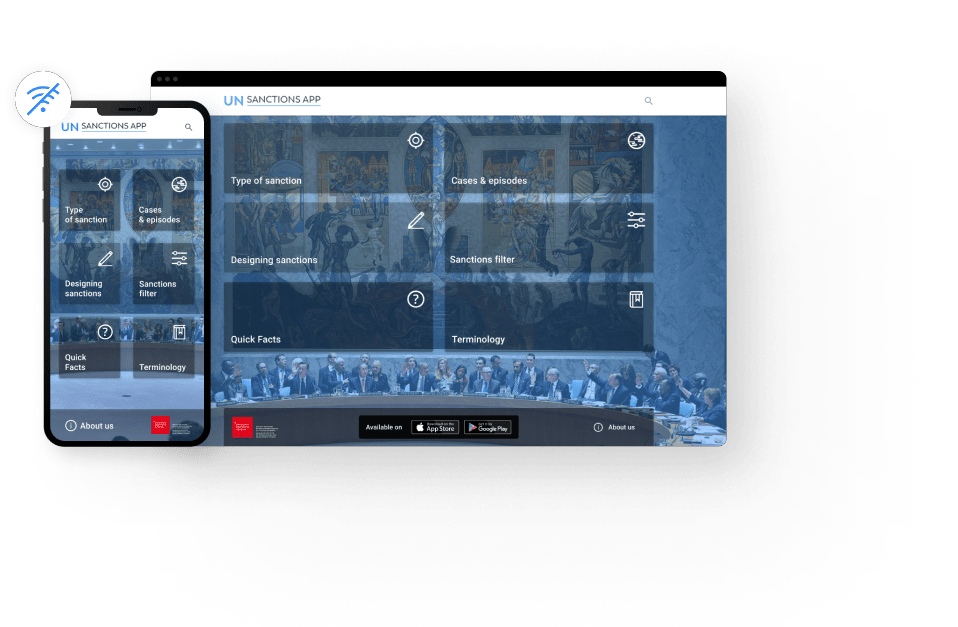
For The Graduate Institute, Geneva (IHEID), we created UN Sanctions APP, an analytical tool for researchers and practitioners who work with UN sanctions. It runs in a web browser and as a native mobile app.
Web, iOS and Android all draw on one data source, and all the main features are also available offline.
2020–2021
project delivered in two phases
Web · iOS · Android
three platforms, one data source
Offline-first
full functionality without a connection
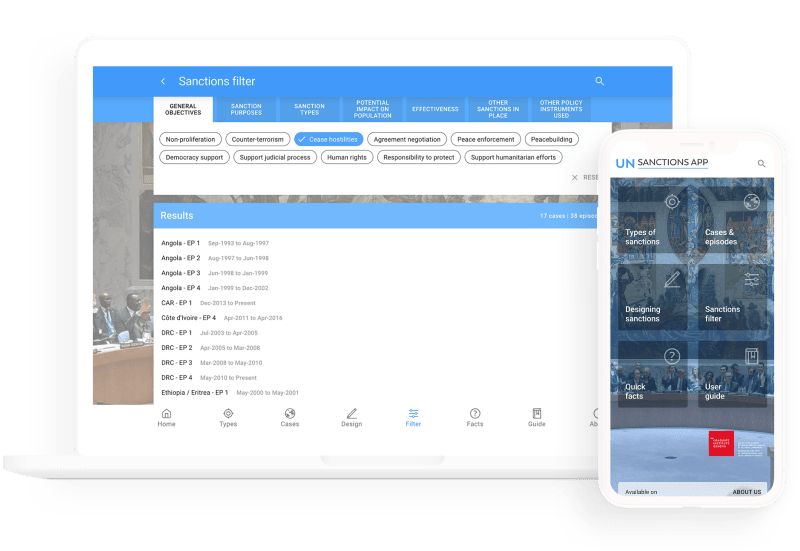
One app on three platforms
We replaced the original app with a new one that runs on the web, on iOS and on Android. All three versions work with the same data and also run fully offline.
Web application
A PWA available directly in the web browser.
iOS app
A standalone app available on the App Store.
Android app
A standalone app available on Google Play.
One data source, three platforms, all working offline.
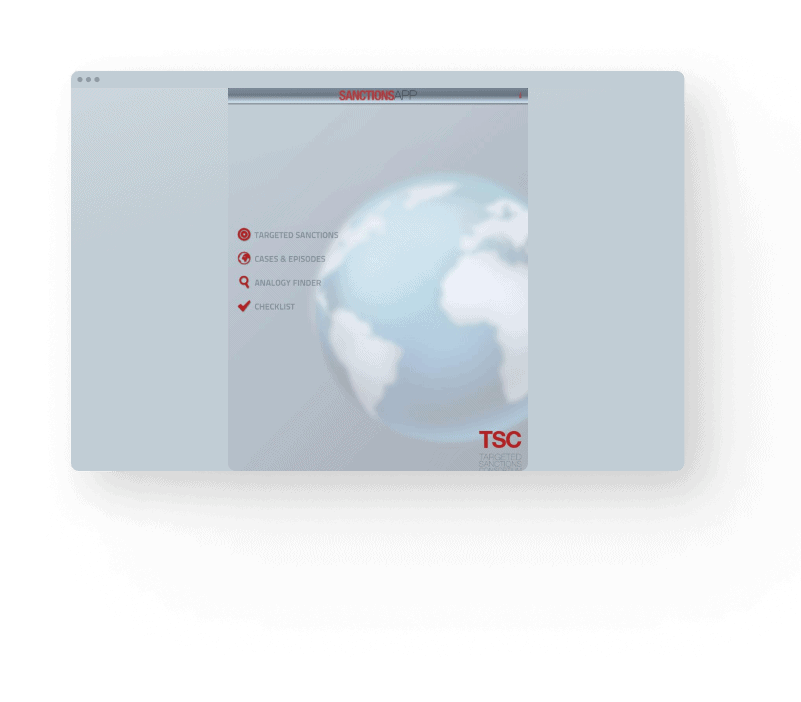
The starting point
The original app ran on Flash, which mobile devices and modern browsers were gradually ceasing to support.
It therefore had to be replaced with a new solution that would run on current platforms and keep the important features of the original app.
After Flash, we rebuilt the app from scratch.
An app that works without the internet
One of the core requirements was that the app should work fully offline. Users can reach the content even when they have no internet connection.
We also needed to design a clear user and admin interface for an app with a large amount of text content.
Content anywhere, even with no signal.
One solution for web and mobile
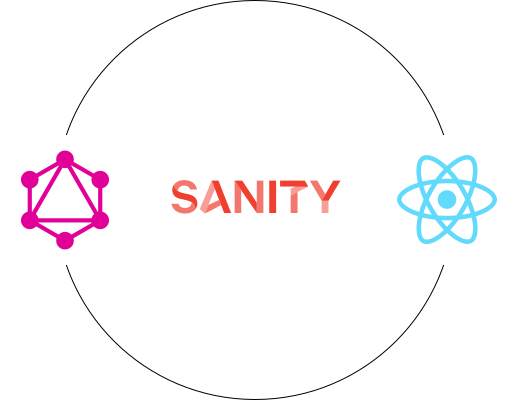
We designed a front-end application in React.js that fetches data via GraphQL from the headless CMS Sanity.io.
For the CMS, we also prepared the data structure and customised the admin interface.
An interface for a large amount of content
UN Sanctions APP is a content-heavy app. In the UX design, we therefore focused mainly on presenting information clearly and making it easy to move between the different parts of the content.
We designed it mobile-first and then adapted it to wider screens.
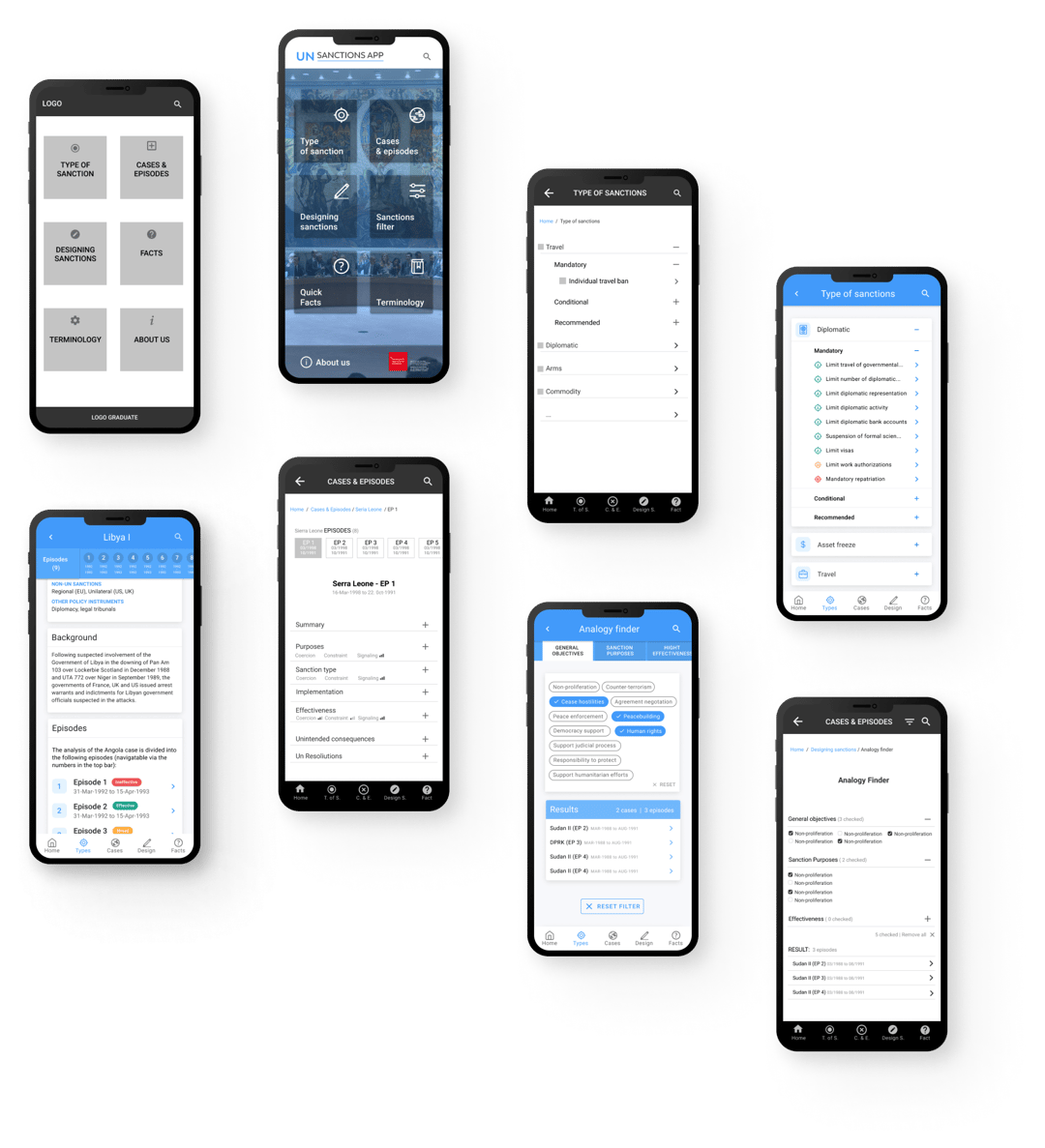
Clear content, even on a small screen.
From PWA to native apps
In the first phase (2020), we built a PWA that could be used directly in the browser or saved to a phone. Even then, it had a fully functional offline mode.
In 2021, native apps built in React Native for iOS and Android followed. They work with the same data, also run offline, and brought new content and improvements.
A partnership set up for ongoing development
We worked on the project in close cooperation with the client's team, with regular communication and a clear overview of tasks.
Regular status meetings
Together we kept reviewing the project status, current tasks and further improvements.
Direct line to the team
We dealt with questions and decisions straight away, without unnecessary waiting.
Overview of all tasks
The client had access to the full list of completed and planned tasks and their status.
Project management
A project manager coordinated communication between the client and the development team.
More custom apps
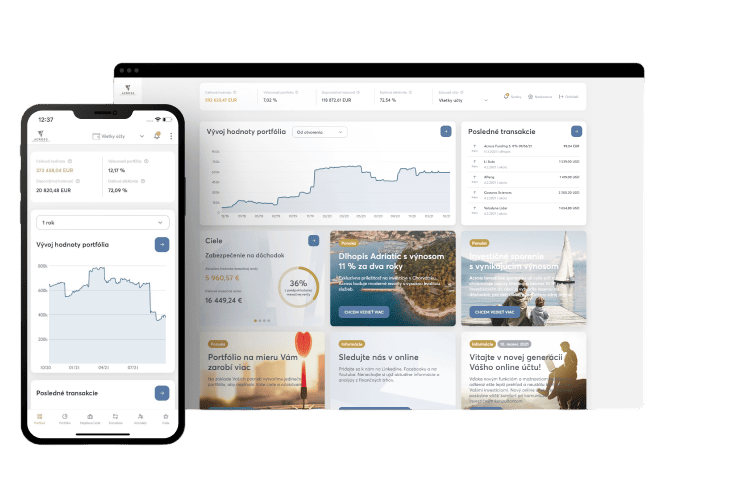

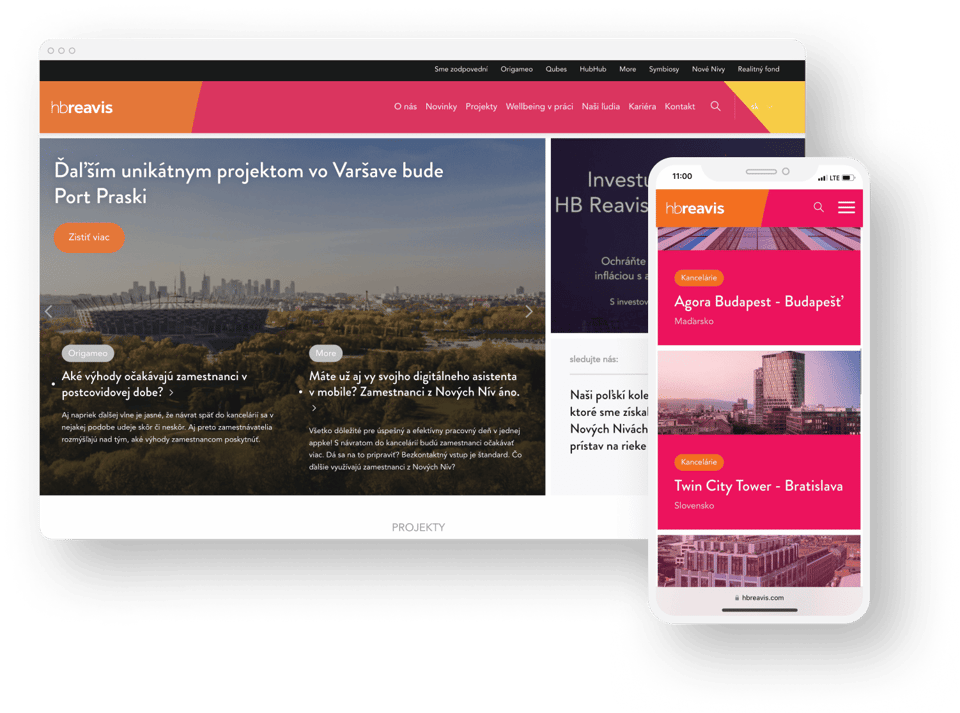

Your app can work offline too.
We will design and build it for web, iOS and Android on a single data source.
No-obligation consultation.
We reply within 24 hours.