Our invoicing plugin, ready for e-invoicing
From 1 January 2027, VAT payers in Slovakia have to send e-invoices to domestic companies. We had to prepare a plugin that hundreds of online shops invoice through without breaking a single invoice it had already issued.
Online shops got e-invoicing in October 2026 as an ordinary update to version 1.1, almost three months before it became mandatory.
3
months before the deadline, e-invoicing reached online shops
5
months of staged rollout, from April to September 2026
100+
online shops invoice through the plugin
440+
automated tests check every version
What e-invoicing changes
Until now, sending the customer a PDF was enough. An e-invoice is a structured file the buyer’s accounting system reads on its own, and it reaches companies through the Peppol network.
A different format
The invoice is in Peppol BIS Billing 3.0 (UBL 2.1), not a PDF.
Checking the buyer
Before sending, you need to know whether the company is registered on Peppol.
Sending via an access point
The e-invoice goes out through a Peppol access point with the SAPI-SK interface.
For an online shop, this means one order has to produce both a PDF for the consumer and an e-invoice for the company, with the same number and the same amounts.
Why patching was not enough
We have maintained Faktúry pre WooCommerce since 2013. For thirteen years we adapted the code to new versions of WordPress and WooCommerce, but it could not carry e-invoicing. So we rewrote the plugin, PDF generation included.
Getting the new code to online shops that had invoiced through the plugin for years was harder than writing it. Invoice numbers must not skip or repeat, and nobody changes an invoice once it is issued.
Numbering, settings and old invoices therefore had to stay exactly as they were.
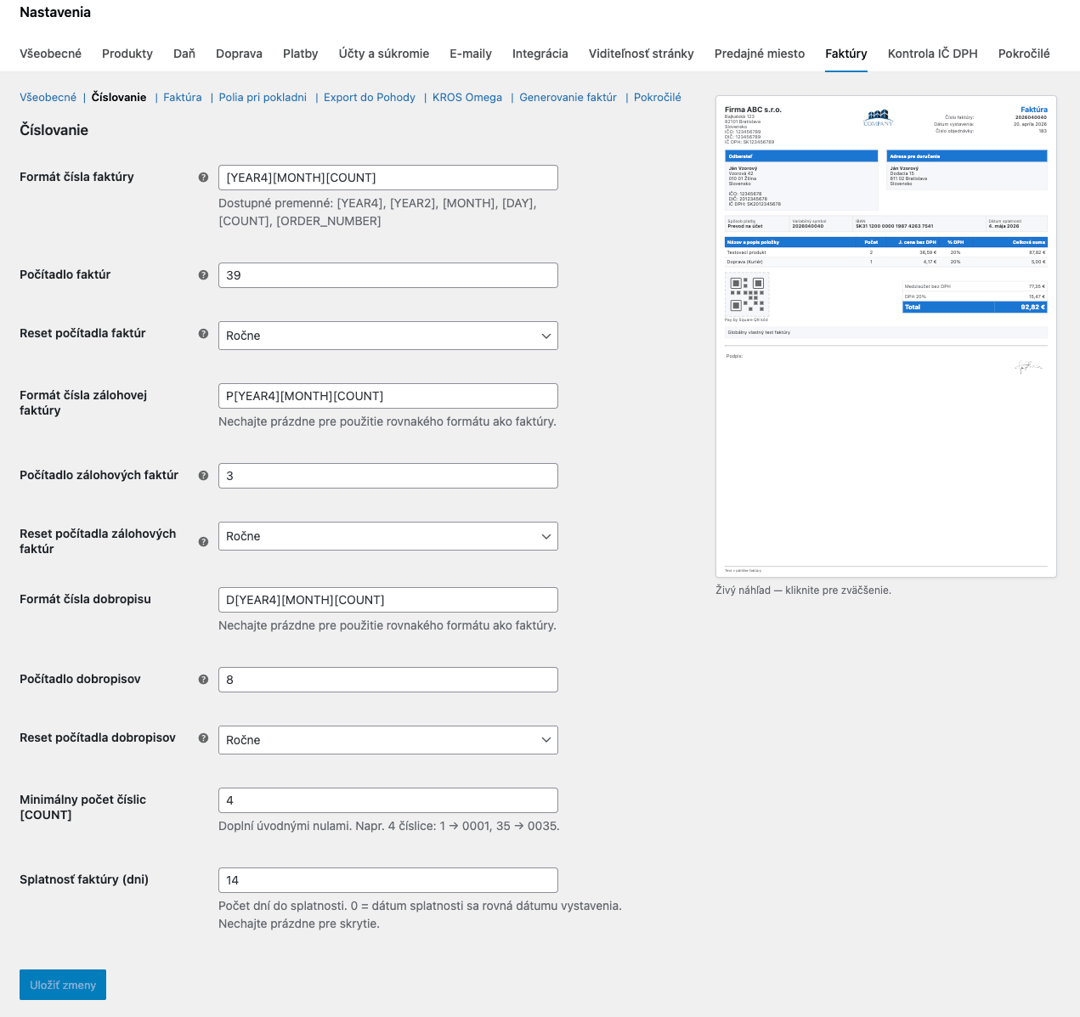
The new version must not break a single old invoice.
An e-invoice from the same order
For business customers, the plugin issues an e-invoice alongside the regular invoice, builds it right in the online shop and checks before sending whether the buyer is registered on Peppol.
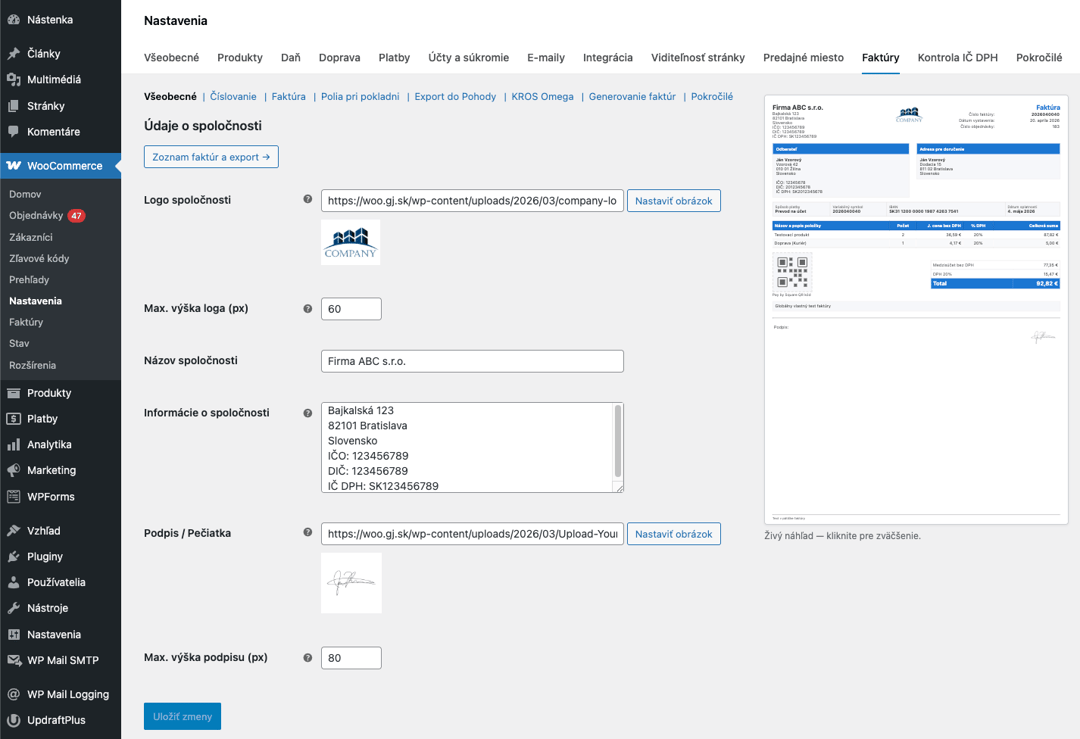
The plugin catches structural errors in an e-invoice as soon as it is created, not when it reaches the buyer. Credit notes for refunds and PAY by square QR codes on proforma invoices work as before.
Invoices and customer data stay in the WordPress shop, unlike the SuperFaktúra plugin, where they live in a cloud service.
We test accounting for real
E-invoicing must not break what already worked for online shops: the Pohoda export and the KROS Omega connection.
Pohoda gets an XML file with account assignment, cost centre, activity and job. We do not just check the export, we actually import it into Pohoda. Amounts and VAT rates have to match to the cent, including for foreign business customers.
The plugin sends invoices to KROS Omega through its API and pulls payments back. We test the connection on a live account: invoices, proforma invoices and credit notes have to end up as separate documents with the correct VAT.
We rolled it out in stages
An update from our server reaches every online shop at the same time. With invoicing, we therefore went slowly.
New customers first
In April 2026 we gave version 1.0 only to online shops installing the plugin for the first time. Existing online shops stayed on the old version.
Testing the switch
We tested the switch from the old version against its real code. Numbering continues, the plugin recognises old invoices and keeps their number and issue date when it regenerates them.
Only then everyone
We released the new version to existing online shops in September 2026, five months later. E-invoicing followed in October.
For online shops, an ordinary update
E-invoicing reached online shops in October 2026, almost three months before it became mandatory. Their numbering, settings and old invoices stayed as they were. We know of no invoice that broke in the switch.
Sending through the Peppol network is still in a trial phase.
In our care since 2013
E-invoicing is the latest change to a plugin we have maintained since 2013, together with the other plugins on PlatobneBrany.sk.
We fix critical bugs within 3 working days at most, and before every new version we issue a real invoice and credit note on a test shop. How we look after the whole plugin portfolio is described in the PlatobneBrany.sk case study.
More plugins
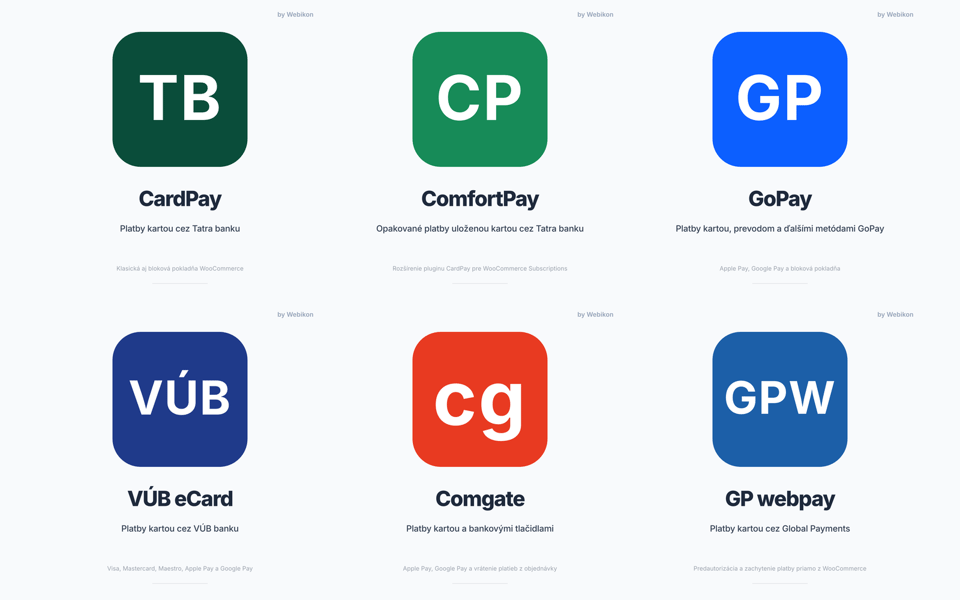

Payment integrations we have maintained since 2012
Plugins for more than 20 payment systems. Since 2012, we have adapted them to every change, and 2,600+ online shops use them.
The SuperFaktúra plugin was built at Webikon
An open source WooCommerce plugin we built on our own initiative. In 2017, SuperFaktúra’s maker took it over.
We can connect e-invoicing to your system, too.
Whether it is an online shop or an internal system, we build the connection and keep looking after it after launch.
No-obligation consultation.
We reply within 24 hours.