AI does the work.
People decide.
When we maintain our WooCommerce plugins, AI agents and scripts do the repetitive work. Where a mistake would cost money, a person decides and checks.
This is how it works in practice: where AI does the work, where we stop it, and how we check that it isn't wrong.
57
issues found before release in the first two weeks of review
120+
plugin versions released since January 2026
600+
emails to customers since summer 2026, every batch approved by a person
We automate what repeats
We maintain 14 WooCommerce plugins: payment gateways for Slovak banks, invoicing, stock and shipping. A bug in a payment plugin means an unpaid order, or a paid one the shop doesn't know about.
Banks change their APIs, WordPress and WooCommerce release new versions every few weeks, and every update reaches hundreds of online shops at once.
So AI agents and scripts do the repetitive work: code changes, tests, review, the changelog and putting the release together. A person decides what gets fixed, whether a version has passed review and when customers receive it.
How we look after these plugins in the long term is described in the PlatobneBrany.sk case study.
Where AI works and where people decide
A person decides what gets fixed as soon as an issue is reported. Agents and scripts then prepare the work. Before release, a person decides at two more points, and without them the version goes no further.
Fix and tests
changes the code, runs the tests and writes the changelog; without passing tests the version goes no further
Independent review
without a positive result the version is not sent
Approves the release
marks the version for release
Test payment
this exact version on a test online shop
Releases the update
online shops see it in their admin
A script checks that the version number is right and that every file is included. AI gets the work that needs judgement: it looks for bugs in the code, writes the changelog and assesses situations a script doesn't recognise.
Where only a person decides
A model can overlook an instruction. If it attempts a step that belongs to a person, scripts and permissions stop it.
Releasing a version
Only a person tags and sends a new version.
Releasing the update to customers
Only a person switches on the update for online shops, naming the plugin and the version number.
Emailing customers
A person approves every batch of emails. A test email comes to us first.
Replying to a customer
The agent has read-only access to support and drafts a reply. A person sends it.
AI makes mistakes. So we check it
One AI agent writes the code, another looks for bugs in it, and before release it is also reviewed by several different AI models, each with different weak spots.
A version that hasn't passed review cannot go to customers. If the code changes after review, the review has to be repeated. In the first two weeks, 51 such reviews ran across 10 plugins. They found 57 new issues, and we fixed 37 of them before release.
A person decides how serious a finding is. A serious problem stops the release. A minor one gets fixed in the next version, so it doesn't hold up a more important fix or a new feature.
The AI doing the review gets things wrong sometimes, too. Early on, it also reported problems that weren't in the code: two findings out of six in a small sample. So now it has to show exactly where each issue is, and we check serious findings once more, independently. In the next review of ten plugins, all 25 serious findings were confirmed.
We don't take AI findings on trust. We check them.
What it looks like in practice
New WordPress, first update the same day
When WordPress 7.1 came out, seven of our plugins needed changes. Instead of going through them one by one, we started a separate agent for each plugin.
Each one prepared its version up to “ready for release”: changes, tests, changelog and independent review. A person then approved the release. The first update reached customers the same day, and within two days we had released five versions.
Support sees what several shops report
An agent reads the support requests, finds problems that keep coming up across several customers and drafts a reply. A person sends it. Before the requests reach the language model, a script removes any login details customers sometimes paste into them.
When a WordPress security update or a new plugin version comes out, an agent lists the online shops it affects and prepares the emails. Since summer 2026, we have sent more than 600 emails this way in nine batches. A person reads and approves every batch before it goes out.
The same approach for your process
It fits wherever the same work repeats and a mistake costs something: orders, invoices, customer requests or internal reports.
We split the process
Anything with a single right answer goes to a script. Where judgement is needed, we use AI.
We set where a person decides
We secure these points technically, not just with an instruction to the model, so the AI cannot get around them.
We measure and fine-tune
We track where the AI gets things wrong and adjust the rules accordingly.
AI stands on systems that work
AI only works as well as the systems it is connected to. These projects show what we build and maintain underneath it.

Payment integrations we have maintained since 2012
Plugins for more than 20 payment systems. Since 2012, we have adapted them to every change, and 2,600+ online shops use them.
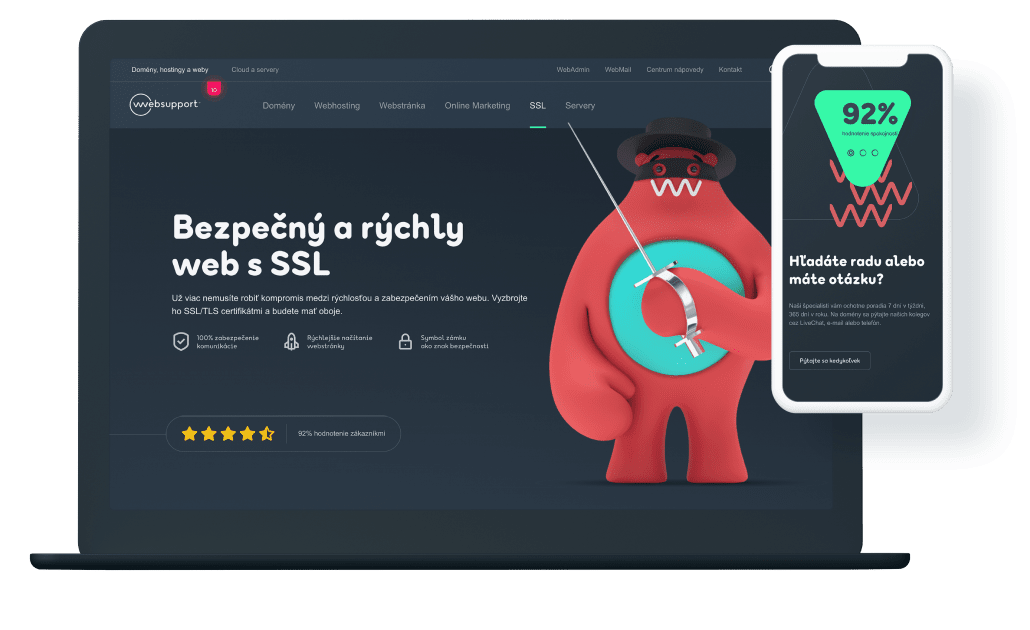

Corporate website with a focus on detail and speed
Long-term development and growth of the website for a Slovak web hosting provider.
We can split your process the same way.
Tell us what takes up too much time in your company. We'll show you which part AI can take over and where a person should decide.
No-obligation consultation.
We reply within 24 hours.